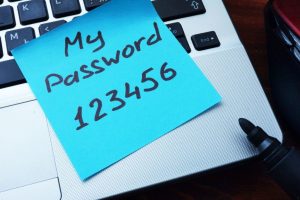

Password — a simple word, often ignored, often underestimated. Yet it is the first gatekeeper of every digital system we rely on. And when that password is weak, unchanged, or predictable, it becomes the beginning of the biggest cybersecurity disasters.
This truth became painfully clear in a recent real-world incident where a hospital’s CCTV system was accessed using the default password “admin123.” No hacking genius, no malware, no exploit — just a weak password left untouched for years. What followed was something no organisation ever wants to face: confidential footage stolen and misused online.
But here’s the alarming part — this wasn’t an isolated failure. The same default password was being used across multiple systems in schools, offices, factories, retail outlets, and private homes. A single careless choice had quietly connected hundreds of vulnerable systems across India.
And that is how a password — the smallest detail — opened the biggest door.
Password Neglect: The Silent Threat in Modern Technology
We live in an age where organisations invest heavily in technology — CCTV cameras, cloud dashboards, Wi-Fi systems, access points, servers, IoT devices, firewalls.
But despite all this, breaches still happen. Why?
Because technology follows configuration.
If we leave a default password, the system assumes we meant to.
If we don’t enforce access control, it assumes everyone is trusted.
If we don’t set monitoring, it silently functions without complaint.
Technology didn’t fail in this case.
We failed to secure it.
A password is not just a string of characters — it is the first decision that defines the security maturity of an organisation.
How One Password Can Break Everything
A weak password like admin123 can lead to immense damage:
🔴 1. Personal Privacy Destroyed
Sensitive footage that should have been safe within hospital walls was leaked globally. The impact on victims is emotional, social, and irreversible.
🔴 2. Corporate Reputation Damaged
Trust is fragile. A single incident like this can create doubt about the organisation’s ability to protect its customers.
🔴 3. Legal & Compliance Fallout
Data protection authorities now impose strict penalties for negligence. A simple password mistake can turn into a courtroom issue.
🔴 4. Operational Disruption
breached system means operations must halt until the risk is assessed and resolved. Productivity drops instantly.
🔴 5. Global Exposure
Once leaked online, digital content spreads like wildfire. There is no real way to take it back.
And all of this because one password — one word — was never changed.
Why Weak Passwords Still Exist in 2025
It’s not about intelligence. It’s about behaviour.
People prefer convenience.
Short, easy passwords.
Default credentials that “just work.”
The assumption that “no one will try to break in.”
But hackers don’t begin with advanced tools.
They start with the basics:
-
Common passwords
-
Default credentials
-
Known vulnerabilities
-
Devices with no security update
To them, admin123 is not a password.
It is an invitation.
How to Prevent the Next Password Disaster
Here are the most important practices every organisation must follow:
1️⃣ Never use default passwords
Whether it’s CCTV, Wi-Fi router, server, firewall, IoT device — change the password immediately.
2️⃣ Use strong, unique passwords
A strong password should be:
-
Long (12–16 characters)
-
Random
-
Mixed characters
-
Not reused anywhere
3️⃣ Apply Multi-Factor Authentication (MFA)
A stolen password becomes useless if MFA is enabled.
4️⃣ Implement role-based access control (RBAC)
Not everyone needs admin access. Limit privileges.
5️⃣ Enable real-time monitoring
Modern systems can alert you to unusual logins or suspicious activity.
6️⃣ Conduct regular cyber hygiene audits
Review passwords, access rights, firewall policies, and device configurations monthly.
7️⃣ Train every employee, not just IT
Cybersecurity must become part of organisational culture.
Final Thought: Passwords Decide Everything
Every major breach begins with a small oversight.
A password is tiny — just a few characters — but it defines the safety of entire organisations.
In this incident, the world learned a simple lesson:
A weak password is not an inconvenience — it is a security threat.
Technology can only protect us if we protect it first.
Start with the basics.
Start with the password.
Read more about the security