Yesterday, a friend shared our group photo converted to an 80s style using ChatGPT.
It looked great. We all loved it.
And like most of you, I did not think twice about it.
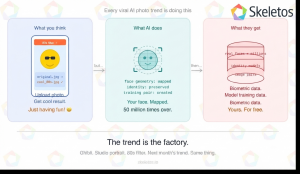
But later that evening I started thinking about something. That group photo had six people in it. One person uploaded it. Six people’s faces were processed by an AI system.
Five of those six people did not upload anything. They did not click any button. They did not agree to anything. Their faces went through ChatGPT’s image processing system without any of them knowing.
This is the conversation that is not happening while the trend is going viral.
Not because the trend is dangerous. It is genuinely fun, and I understand completely why everyone is participating. But because most of us, myself included until recently, did not know what actually happens to a photo once it is uploaded to an AI platform.
What Is the 80s Photo Trend and Why Is It Everywhere
If you have been on Instagram or WhatsApp in the last few weeks, you have seen these images. People are converting their photos into realistic 1980s-style portraits. Big hair, warm film grain, retro colours. Sometimes Bollywood-inspired looks. Sometimes classic Hollywood. All generated by ChatGPT in seconds with a simple prompt.
Before this, it was the Ghibli animation trend in early 2025. Before that, it was action figures and plush toy versions of people. Before that, it was something else.
The pattern repeats because the formula works. Take something personal. Add something creative. Get a result that is shareable and surprising. The engagement is high, the barrier is low, and the output is genuinely impressive.
ChatGPT saw one million new signups per hour during the Ghibli trend. The numbers for the 80s trend are tracking similarly.
This is the product working exactly as intended. And that is precisely what is worth understanding.
What Actually Happens When You Upload a Photo
When you upload your photo to ChatGPT and type your prompt, here is what happens on the technical side.
When a photo is uploaded to ChatGPT, it becomes part of the conversation data. Conversations are saved to a user’s account until deleted, and some data may remain on the company’s systems for up to 30 days after deletion. Certain information can be retained longer for legal, security, or de-identified purposes. LatestLY
On training: according to OpenAI’s usage policies, inputs provided to consumer models can be utilized to train future algorithms unless users actively opt out through privacy settings. Archynewsy
This means if you are using the free or standard paid version of ChatGPT and have not specifically gone into your settings to turn off model training, the photo you uploaded is potentially being used to make the next version of the model smarter.
Users can turn off the “Improve the model for everyone” setting in Data Controls. Temporary Chat mode prevents storage in history and excludes the conversation from training. Business and enterprise products, by contrast, do not use customer data for training by default. LatestLY
That last sentence matters a great deal. Enterprise accounts have stronger protections. Consumer accounts do not, unless you specifically opt out.
Most people doing the 80s photo trend are on consumer accounts. Most of them have not visited their Data Controls settings. The photos are likely contributing to model training.
What Your Face Data Actually Contains
This is the part that most coverage of these trends skips past.
A face carries unique traits that cannot be changed like a password, and major AI apps may use photos to train models by default. Biometric data such as facial geometry, skin tone, and eye spacing can be turned into deepfakes or used to impersonate you in scams. Cloud-stored images and indefinitely retained chat history make true deletion difficult once a photo has been processed. Stolen biometric data can serve as a persistent identifier, raising surveillance and wrongful-identification concerns. ASTIG
Read that again slowly. Facial geometry, skin tone, eye spacing. These are not things you can reset. If your email password is compromised, you change your email password. If your face geometry is in a dataset, you cannot change your face.
Security analysts note that each uploaded selfie supplies detailed facial geometry, lighting data, and personal identifiers that far exceed standard text-based interactions. Archynewsy
When you type something into ChatGPT, you share text. When you upload a photo, you share a biometric profile. These are fundamentally different categories of personal information, and most people treating the photo upload the same way they treat a text prompt are making an error that will be difficult to undo.
There is also something most people miss completely. Images often contain more than the visible face. Metadata can include the date, device details, and sometimes GPS location. LatestLY
The photo you uploaded from your home on a Sunday afternoon potentially shared your home location with the AI platform. Not because you told it. Because the photo contained that information and you did not strip the metadata before uploading.
The Group Photo Problem Nobody Is Discussing
Here is the dimension of this trend that I find most worth talking about.
When my friend uploaded our group photo, he decided on six people. He was the one who clicked upload. He was the one who agreed to the terms of service when he signed up. He was the one who chose to participate in the trend.
The other five people in that photo made no such decision.
Their faces were processed by the same system. Their biometric data is in the same conversation. Their metadata may have been captured in the same way.
None of them were asked. None of them consented.
Transforming images of non-consenting people also raises ethical concerns. Inside AI
This is not a small ethical point. In India, under the Digital Personal Data Protection Act, a facial photograph is biometric data, and biometric data is sensitive personal data. Sharing someone else’s sensitive personal data without their knowledge or consent is a data protection issue, not just a social courtesy one.
Most people uploading group photos to AI photo trend tools have not thought about it this way. They are thinking about the fun output, not about the data implications for every face in the frame.
The Normalisation Effect
A concern highlighted by experts is that viral trends may normalise the practice of uploading personal data to AI tools, making users less cautious about sharing sensitive information. The Tribune
This is the second-order effect that matters most over time.
The first time someone uploaded their photo to a Ghibli filter, they probably paused for a moment. Should I do this? Is this safe? The second time, with the action figure trend, the pause was shorter. The third time, with the 80s filter, it was a reflex. Of course I am uploading. Everyone is doing it.
Each trend lowers the threshold. Each positive, fun experience creates a stronger association between uploading personal photos and getting something enjoyable back. The psychological conditioning works exactly as designed, and the consequence is a steady reduction in the instinctive caution that used to exist around sharing personal images with platforms you do not fully understand.
This matters beyond photo trends. The person who has become comfortable uploading their face to AI tools is the same person who will be less careful when another request comes along that feels low-stakes similarly but carries genuinely higher risk.
What Indian Users Need to Know Specifically
For Indian users, there are dimensions to this conversation that do not apply in the same way globally.
Under the Digital Personal Data Protection Act, facial photographs are biometric data and fall under the sensitive personal data category. Processing biometric data requires explicit, specific consent for the defined purpose. The terms of service that you agree to when you sign up for ChatGPT are written in English, are long, and are almost never read in full. Whether that constitutes meaningful, informed consent for biometric data processing under DPDP is a question that India’s Data Protection Board has not yet formally answered.
There is also an international data transfer dimension. Privacy concerns surrounding AI-generated images are not new. Similar concerns surfaced during the viral Ghibli-style image trend in April last year. Critics argued that such trends could give OpenAI access to thousands of voluntarily submitted images, including facial data, while users focused on creating and sharing stylised versions of themselves. The Tribune
OpenAI is a US-based company. Your photo, uploaded from India, goes to infrastructure in the United States. Under DPDP, cross-border transfer of personal data, and particularly sensitive personal data, has specific requirements. Most individual users uploading photos for a fun trend are not thinking about any of this. But the legal framework that now governs their data is.
For South Asian users especially, the Bollywood angle resonates strongly. That appeal should be balanced with genuine privacy awareness, particularly as personal photos become training data for future models. Inside AI
What Makes This Different From Google Photos or Instagram
A question many people ask is: I already have thousands of photos on Google Photos and Instagram. How is this different?
The difference is in the purpose and the processing.
When you store a photo on Google Photos, the photo is stored. Google uses it primarily for search indexing and to power features like face grouping. Instagram uses your photos for content delivery and advertising targeting. Neither of them runs your photo through an active AI image generation model as the core function.
When you upload a photo to ChatGPT for the 80s filter, the explicit purpose is for an AI model to analyse your face in detail, understand its geometry and characteristics, apply a stylistic transformation, and generate a new image. This requires a much more detailed analysis of your facial data than storing a photo or displaying it in a feed.
Google has implemented safeguards for Gemini images. The company adds a visible watermark and embeds a hidden SynthID marker to flag AI-generated content. ChatGPT does not currently apply similar visible watermarks to user-generated images, leaving provenance less clear. Inside AI
The absence of a watermark on ChatGPT’s generated images means there is no way to trace the AI-generated version of your photo back to its origin. Once it is shared and reshared, it is simply an image with no indicator of how it was made or whose data was used to make it.
How to Participate Safely If You Choose To
None of this is an argument against participating in these trends. They are fun, and the results are genuinely impressive. But there are straightforward steps that change the privacy picture significantly.
Turn off model training before you upload. Go to ChatGPT settings, click Data Controls, and turn off “Improve the model for everyone.” This prevents your photo from being used for training. It takes thirty seconds. Do it before uploading any photo.
Use Temporary Chat mode. This mode does not save your conversation to history and does not use the content for training. It is the closest thing to a privacy-preserving way to use the photo filter features.
Upload solo photos, not group photos. If you want to participate in the trend, use a photo of just yourself. The decision about whether to share your own biometric data with an AI platform is yours to make. The decision about whether to share someone else’s is not.
Strip metadata from your photo before uploading. Most smartphones allow you to remove location and device data from photos before sharing. Use this feature when uploading photos to AI platforms.
Use enterprise or business accounts if you have access. Business and enterprise accounts do not use your data for training by default, giving you meaningfully stronger privacy protection.
Think before uploading photos from work environments. A group photo from the office, from a client meeting, or from a company event contains faces and potentially surroundings that belong to an employer or client context, not just your personal sphere. The colleagues in that photo may not want their images processed by an external AI platform.
A Note for Employers and HR Teams
If you manage a team or run an HR function, the 80s photo trend raises a specific workplace dimension worth addressing.
Employees who upload team photos, office photos, or client event photos to AI trend tools are sharing images that contain colleagues, clients, and workplace environments. Those images may contain identifiable individuals who have not consented, as well as backgrounds that reveal workplace layouts, visible documents, screens, or other elements of the business environment.
This is not hypothetical. It is the same category of behaviour as the Samsung incident we covered in a recent blog, where engineers uploaded sensitive work content to ChatGPT for convenience, without thinking of it as sharing data with a third party.
A simple internal communication reminding employees to keep work-related photos, team photos, and client event images out of personal AI tool accounts is a proportionate and practical response. It does not require banning anything. It simply makes the boundary visible before the upload happens.
Final Thought
My friend shared our group photo in an 80s style, and it looked genuinely great.
I am not going to tell him he did something wrong. He did not. He did something that millions of people are doing every day because it is fun and the technology is impressive.
But I did send him a message afterward. I told him what I have written here. That the six faces in that photo were processed by an AI system that none of the other five people had agreed to upload anything to. That the metadata in the photo might have included location information. That the fun filter and the training data are two products of the same upload.
He did not know any of that. Most people do not.
The technology is not the problem. The awareness gap is.
A face is not like a password. It cannot be changed if it ends up somewhere it should not be. Before the next trend arrives, which it will within weeks, it is worth knowing what you are uploading and what happens to it after the filter is applied.
The trend will pass. The data stays.
Note: This blog is for awareness and educational purposes. OpenAI’s policies are subject to change. Users are encouraged to review the current privacy settings and terms of service directly at openai.com/policies before uploading any personal photographs. For enterprise and business ChatGPT usage, consult your organisation’s IT and compliance teams.