
In June 2026, a wallet DevOps engineer at Binance went looking for an AI tool. He searched, clicked a result, and ran the installer.
It was a trojanized Homebrew installer. Binance detected it and rotated the related credentials, but details about his role and his wallet-team colleagues had already been exposed. thehackernews
That detail is what the attackers kept.
In September, a fake recruiter lured a second engineer into two staged interviews and told him to download an “assignment” with malicious code. On October 29, about $6.3 billion in digital currency was stolen. Yeh hack tech se zyada bharosa ka khel tha. securityonlineWikipedia
If you want crypto exchange hack prevention to be more than a slogan, start with the five months, not the 20 minutes. The same chain can hit any company where a few engineers can authorise a lot of money: an exchange, a bank’s payment switch, an NBFC’s disbursement API or a treasury team.
How did attackers steal $6.3 billion from Binance? According to Binance’s own account, they did not break cryptography. They compromised people and devices for five months, then used stolen credentials against a wallet signing service. Prevention means hardening those devices, putting transaction policy outside the signer, and automating the halt.
What Happened, in Technical Order
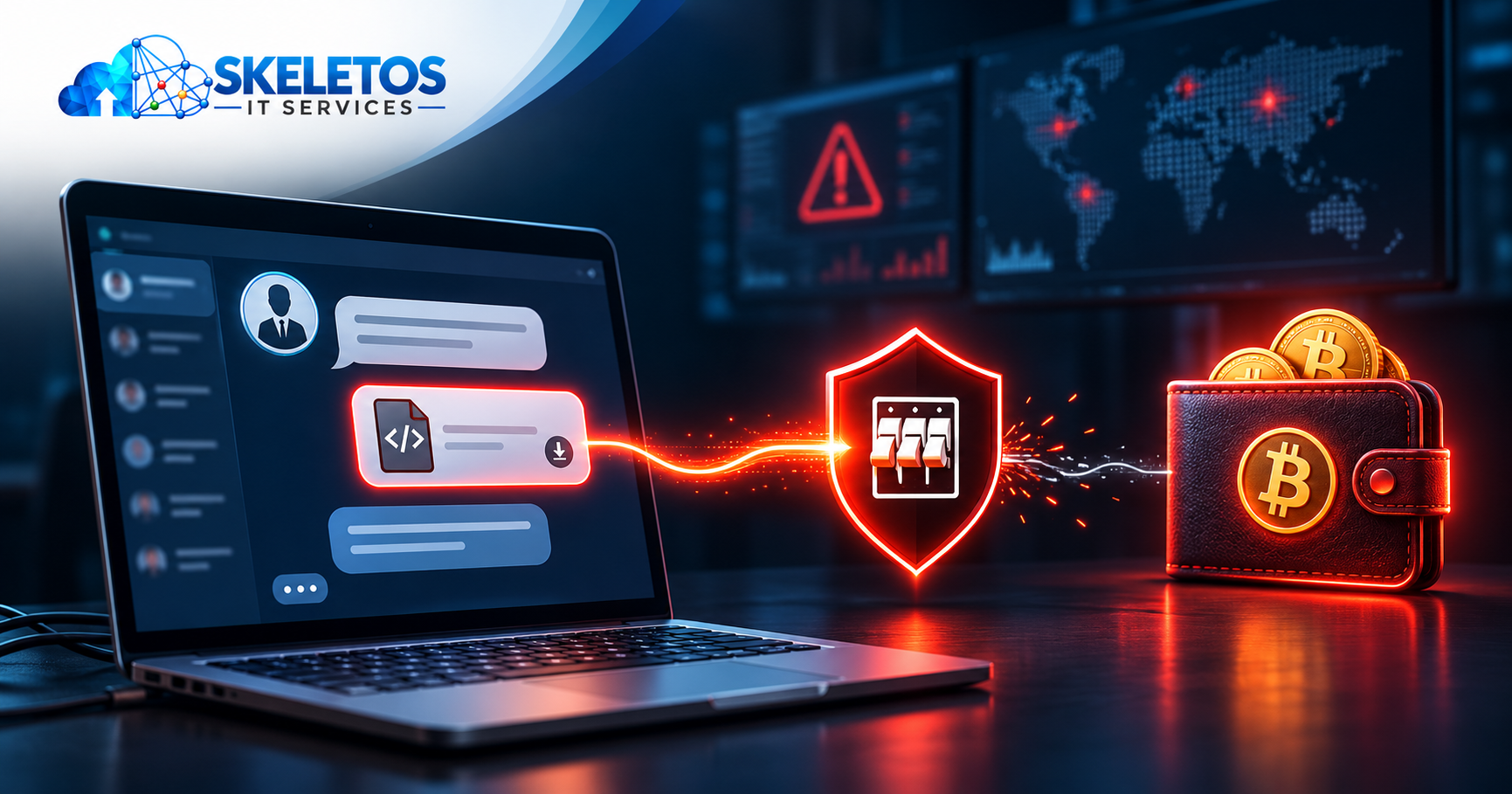
Binance describes a five-month campaign that combined a poisoned download, a staged recruitment process, malware that evaded endpoint detection, and an internal AI tool the attackers turned against its own wallet engineers. bitcoinmagazine
- June: An engineer searching for an AI tool downloaded a trojanized Homebrew installer. thehackernews
- September: The fake interviewer built trust with supposed social accounts, photos and videos, then asked the engineer to download an assignment onto his work laptop. The malware swapped a developer tool for a rogue copy and evaded endpoint protection. NPRsecurityonline
- October 20: The attackers used the compromised machine and an internal AI tool to take over additional wallet engineers’ devices and obtain deployment credentials. cryptotimes
- October 29: They reached an internal wallet signing service and started transactions outside the normal withdrawal process. They also used Ethereum’s EIP-7702 to give an attacker-controlled contract partial control of a hot wallet. Binance’s hot wallet sent 18,270 BTC to an attacker address. Five hot wallets sent 233.46 million XRP within four minutes. Binance Reveals How Fake Job Interviews and AI Tool Abuse Led to $6.43 Billion Theft +3
- The clock: Most of the theft took about 20 minutes, but stopping all transfers took around four hours. Binance cleared the malicious delegation at 00:10 UTC on October 30. sifyx
Nothing here defeated the blockchain. The attackers took over trusted people, then trusted systems did what they were told.
The Attack Was Trust, Not Technology
A hot wallet signing service is the system that authorises outgoing crypto transactions using keys, or key shares, that are held online. If an attacker gets authenticated access to it, the blockchain treats their transactions as legitimate. That is why the controls around the signer matter more than the wallet’s cryptography.
Because the wallet used multi-party computation, no single private key existed that could immediately revoke the malicious authorizations. The design that protects keys also slowed the cleanup.
Binance’s own response points the same way. It has added tighter device controls, stronger wallet-service risk controls and expanded AI-based behavioural anomaly detection. It is also reviewing its signing policy coverage and hot wallet controls. xbitcoinmagazine
The ten controls below are my read of where a company should invest to avoid the same chain. They are recommendations, not Binance’s findings.
Crypto Exchange Hack Prevention: The 10 Controls
1. Make developer machines default-deny for software
A trojanized installer from a search result should never run. Enforce application control with WDAC or AppLocker on Windows, and an allow-list agent such as Santa or your MDM policy on macOS. Mirror approved tools in an internal package repository, pin versions, and verify signatures and SHA-256 hashes. Block direct installer pipes into a shell.
Verify it: try installing an unsigned tool found through a search engine on a test device. It must fail.
2. Watch the toolchain for tampering
The malware replaced a legitimate developer tool component with a malicious version, then talked to an attacker server. Baseline hashes for toolchain binaries. Alert on modified signed binaries, unsigned child processes spawned by an editor or git, and a build tool starting a network connection it never made before. yoopya
Verify it: replace a test binary in a lab. Your EDR or file integrity monitor should alert within minutes.
3. Apply default-deny egress to privileged machines
Route developer and privileged endpoints through a proxy with an allow-list. Block newly registered and uncategorised domains, log all DNS, and alert on beacon-like timing. Analysts suggest allow-listing and egress filtering on developer machines to create friction for this kind of malware execution. tech-insider
Verify it: from a privileged laptop, connect to a freshly registered domain. It should be blocked and logged.
4. Never run outside code on corporate hardware
Binance lists fraudulent job interviews, malicious software disguised as developer tools, compromised packages and browser extensions, and fake video-conferencing apps among the techniques it sees.
Make the rule absolute: external assignments, repos, and meeting apps run only in a disposable VDI or VM with no route to internal networks. Disable lifecycle scripts by default (for example, npm ignore-scripts) and turn on editor workspace trust. Teach privileged staff that recruiters are an attack surface, and verify recruiters through the company’s official channel.
Verify it: run a consented fake-recruiter test against one engineer and measure what happens.
5. Move privileged engineers to hardened workstations
Wallet, treasury, and payment engineers need dedicated devices with no general browsing, no personal email, and no unmanaged tools. Require device compliance through conditional access and FIDO2 hardware keys. Information about Engineer A’s role and his colleagues was exposed. Reduce how much of your privileged org chart is public, and treat any such leak as a trigger to harden those roles. thehackernews
Verify it: a non-compliant device must be unable to reach the signing or deployment environment, even with valid credentials.
6. Remove standing credentials
The attackers obtained deployment credentials during the October 20 takeover. Standing tokens on laptops are the target. Use a secrets vault with just-in-time access and short TTLs measured in minutes, workload identities instead of stored keys, and session recording for signing-service administrators. cryptotimes
Verify it: list every long-lived credential that can touch the signing path. The target is zero.
7. Govern internal AI tools as privileged integrations
The attackers turned an internal AI tool against the company’s own wallet engineers. Binance has not published the mechanism, so treat this as a design rule. Give each AI tool its own scoped service identity. Segment it from engineer endpoints and deployment credentials. Allow-list its actions, require human approval for anything touching credentials or devices, log every tool call immutably, and limit its egress. We cover the wider approach in our AI agent governance steps. bitcoinmagazine
Verify it: from the AI tool’s identity, try to reach an engineer’s laptop or a deployment secret. Both must fail.
8. Put transaction policy outside the signer
The attackers initiated transactions outside the normal withdrawal process. A valid session must not be enough. Enforce policy in an independent engine: per-transaction and rolling-window caps, an address allow-list with a time-lock for new destinations, per-asset limits, and out-of-band approval from a separate trust domain. In an MPC setup, each participant should enforce policy itself instead of trusting the initiator. Keep hot-wallet float small and sweep the rest to cold storage automatically. thehackernews
Verify it: in a test, attempt a transfer outside the normal workflow with valid credentials. The independent policy must block it.
9. Monitor smart-account delegation, and drill the revoke
Security reviewers recommend monitoring and quickly revoking EIP-7702 delegations on high-value wallets. Alert on set-code (type 0x04) transactions and on any hot-wallet address whose code starts with the delegation prefix 0xef0100. Allow-list approved delegate contracts. For MPC wallets, pre-stage the emergency revoke, which is an authorization to the zero address, and rehearse it with the quorum so it takes minutes, not hours. securityonline
Verify it: time a quarterly drill from alert to cleared delegation.
10. Build an automatic circuit breaker and rehearse the response
The bulk of the theft ran about 20 minutes, and stopping it took about four hours. Detection that waits for human triage loses that race. Define a trigger, for example, outflow above a set percentage of hot-wallet float inside a rolling five-minute window, that automatically halts signing and withdrawals. Pre-agree contacts at stablecoin issuers and exchanges for rapid freezes. Partners froze about $3 billion of the stolen assets. Preserve logs before cleanup, and plan regulator notices, including CERT-In’s 6-hour window where it applies. My target is containment inside 15 minutes. sifyCNN
Verify it: run a game day with a simulated drain and measure time to halt.
Where Network Access Control Fits
Let me be straight about scope. EasyNAC will not stop malware that runs on a managed laptop. It narrows what that laptop can reach.
- It identifies every device on the network the moment it connects, and quarantines unknown ones.
- It lets only registered, compliant devices reach signing, treasury, and deployment segments.
- It flags a developer laptop that suddenly talks to privileged engineers’ machines, the lateral step in the October 20 stage.
- It gives real-time device inventory and evidence, and deploys without switch changes or network reconfiguration.
Controls 1 to 4 and 7 to 10 still need endpoint, identity, and application work. Our IT services team handles those through Intune device policy, application control, and response playbooks. Together, they cover the chain.
What Indian Banks, NBFCs and Fintechs Should Take From This
You may not hold crypto, but you hold signing authority. Payout APIs, treasury, UPI operations, and disbursement systems have their own wallet engineers. Fake recruiter lures aimed at those people are a real risk, especially in hiring season. India has also been here before: WazirX lost roughly $230 million in 2024.
The RBI’s July 2026 framework for commercial banks calls out privileged access management, segregation of duties, and real-time monitoring, and CERT-In’s 6-hour reporting window applies to qualifying incidents. Our earlier posts on the WhatsApp VulcanRAT campaign and the RapiPay 23-minute fraud show the same shape: a trusted channel, a privileged person, fast money, and a slow response.
A 90-Day Plan
| Window | Focus | Controls |
|---|---|---|
| Days 1 to 30 | Stop the easy wins | 1, 3, 4, 6 |
| Days 31 to 60 | Isolate and govern | 5, 7, and EasyNAC segmentation |
| Days 61 to 90 | Policy and response | 8, 9, 10, plus one game day |
Track four numbers monthly: long-lived credentials on the signing path, privileged devices outside compliance, time to halt in drills, and share of hot-wallet float versus total.
Final Thought
Binance says it covered the loss from its reserve fund, treasury, and futures insurance fund. That worked, because the reserve was built before the day it was needed. CNN
The controls above work the same way. They only count if they exist before the recruiter’s first message.
Hack ka nahi, bharosa ka khel tha. So the fix is not more trust. It is fewer places where trust alone can move money.
At Skeletos IT Services, we help Indian banks, NBFCs, and fintech companies deploy EasyNAC, a plug-and-protect Network Access Control solution that gives IT teams real-time visibility into every device on their network without any switch changes or network reconfiguration. If you want to understand what is actually connected to your network right now, we can show you in a 30-minute demo.
Note: This blog is based on Binance’s incident report of November 3, 2026, and reporting by Reuters, The Hacker News, Chainalysis, and other outlets. Binance’s account is preliminary, and an independent review is underway. Control recommendations are Skeletos’s own analysis. This blog is for awareness and educational purposes.